
Locally developed innovative fish vaccine offers solution to bacterial infections in tilapia farming in Tanzania
The Problem: Diseases Threaten Fish Farmers
Fish farming is a growing economic activity in Tanzania with the potential to generate food production, employment and income. But infectious diseases continue to be a major problem, threatening fish survival and productivity.
They include a hemorrhagic disease caused by the bacterium Aeromonas hydrophila, which can cause severe infections in tilapia and losses for fish farmers.
Aquaculture is growing but the availability of suitable fish vaccines in Tanzania is still limited, leaving farmers with fewer options to protect themselves from outbreaks.
Scientists from the Nelson Mandela African Institution of Science and Technology (NM-AIST) have decided to address this problem by developing a locally relevant vaccine to protect tilapia and promote sustainable fish farming.
From research to innovation
The research journey started in 2017 under the leadership of Alexander Mzula together with Robinson Mdegela and Gabriel Shirima from the School of Life Sciences and Bioengineering (LISBE) of NM-AIST.
First the team looked at the occurrence and distribution of bacterial diseases in farmed fish in Tanzania. They identified and isolated the bacterium responsible for the disease via field studies, sample collection and laboratory analysis.
Then they concentrated on developing a vaccine, but using an alternative approach to some existing fish vaccines.
Instead of reducing bacteria with antibiotics, the researchers used a technique that used temperature adjustments to weaken the bacteria.
This resulted in the development of a tilapia vaccine in 2020 – a significant stride toward a locally developed solution to disease in fish.
The Innovation: A Vaccine Specific to Tilapia
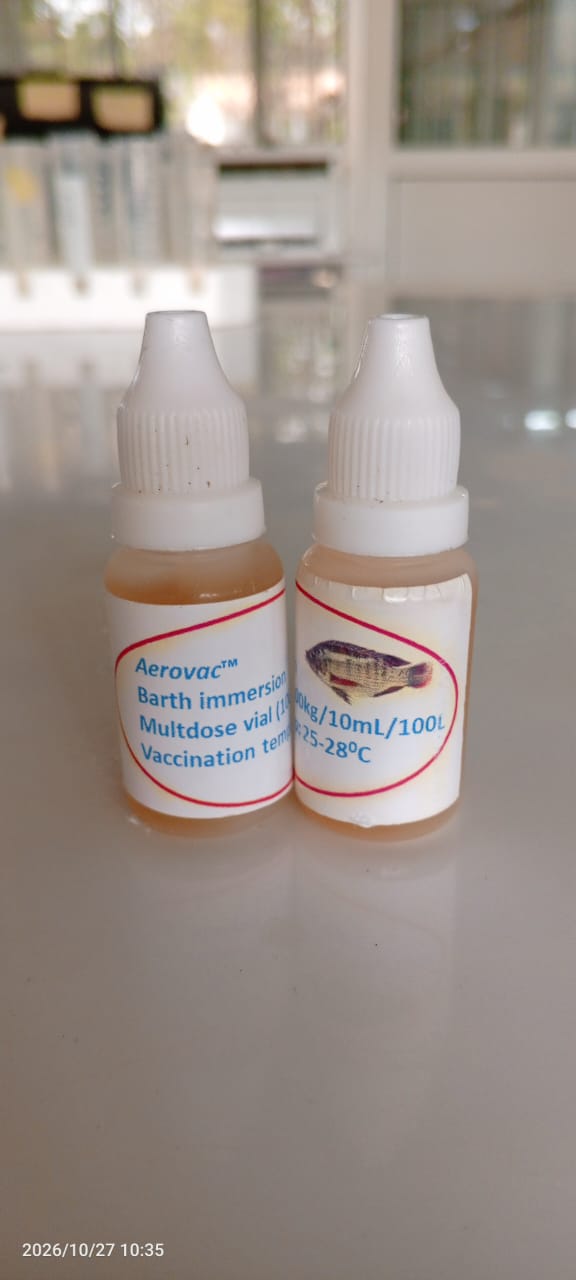
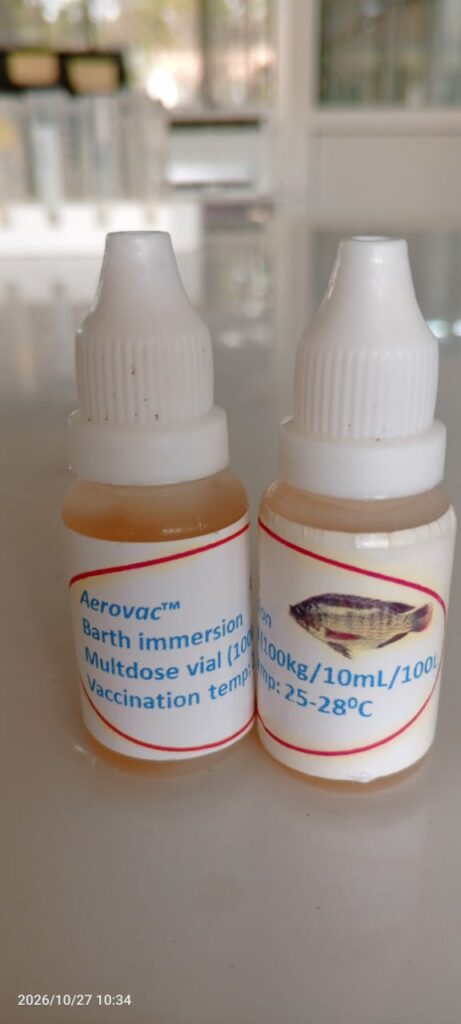
The innovation is a vaccine developed to help protect tilapia from infections caused by Aeromonas hydrophila.
The vaccine is a heat attenuated version of the bacterium, produced by a controlled laboratory process to reduce its ability to cause disease but stimulate protective immunity in fish.
One of its practical advantages lies in the mode of its administration.
Instead of injecting fish one by one with vaccines, the vaccine is delivered by water immersion, so young fish, called fingerlings, can be vaccinated while they are immersed in treated water.
In the reported research procedure fingerlings were immersed for about 45 min.
This approach could facilitate vaccine administration, especially for fish farmers with large numbers of young fish.
The scientists also noted that the heat-attenuation technique could be a less expensive alternative to methods where the attenuation is based on antibiotics.
The importance: helping fish, helping aquaculture farms become more productive
If successfully validated registered and adopted the vaccine could provide important benefits to Tanzania’s aquaculture sector.
The technology can help to prevent infections by Aeromonas hydrophila and can result in fewer losses from disease, higher survival of fish and more reliable fish production.
Better disease prevention could boost the productivity of tilapia farmers, including those who use cage-farming systems, and reduce the economic risks from outbreaks.
It could also contribute toward the development of locally available fish-health technologies, and reduce the reliance on solutions developed outside of Tanzania.
Ultimately healthier fish stocks mean stronger aquaculture businesses, more fish production and a better food security.
From Laboratory Tests to Field Testing
After development, the vaccine then moved into pilot testing in Mwanza and Dar es Salaam in 2022 and 2023.
The research team reports that the trials were promising and that under the conditions tested, the vaccine efficacy in fingerlings vaccinated by water immersion was 85%.
This result provides an optimistic basis for further field validation and potential commercial development.
The innovation was also patented in 2024 with registration number TZ/P/2024/000017 with NM-AIST being recognized as the patent holder.
The patented technology is the composition, process and method of vaccinating tilapia with heat attenuated Aeromonas hydrophila .
The study was also recognised by the Tanzania Commission for Science and Technology (COSTECH) in 2022.
The Way Forward Toward broader application
The vaccine is now at pilot and market-testing stage and further field validation and product registration are the next priorities.
The research team is actively seeking partners to license and commercialize the technology, to help with the completion of pilot activities and progress toward production.
Successful development and regulatory approval may provide opportunities for wider use of the vaccine in the aquaculture industry in Tanzania.
With this innovation, NM-AIST demonstrates how locally-driven scientific research can provide solutions to national challenges, and bolster emerging industries and contribute to sustainable food production.
Innovation at a Glance
| Innovation | Heat-Attenuated Tilapia Vaccine |
| Lead Researcher | Alexander Mzula |
| Research Team | Robinson Mdegela and Gabriel Shirima |
| Institution | Nelson Mandela African Institution of Science and Technology (NM-AIST) |
| School | Life Sciences and Bioengineering (LISBE) |
| Research Started | 2017 |
| Year Developed | 2020 |
| Sector | Aquaculture, Biotechnology, Fish Health and Food Security |
| Target Disease | Infection associated with Aeromonas hydrophila |
| Administration Method | Water immersion |
| Reported Research Efficacy | 85% under tested conditions |
| Patent Number | TZ/P/2024/000017 |
| Patent Year | 2024 |
| Patent Holder | NM-AIST |
| Development Stage | Field piloting and market testing |
| Pilot Locations | Mwanza and Dar es Salaam |
| Potential Beneficiaries | Tilapia farmers and aquaculture enterprises |
Work with us
NM-AIST invites collaborations with aquaculture businesses, biotech firms, vaccine manufacturers, investors and development partners interested in taking this innovation forward.
Current partnership opportunity: Support for further field trials, product registration, licensing, commercialization and eventual vaccine production.
Locally developed science and innovation driving fish health.