
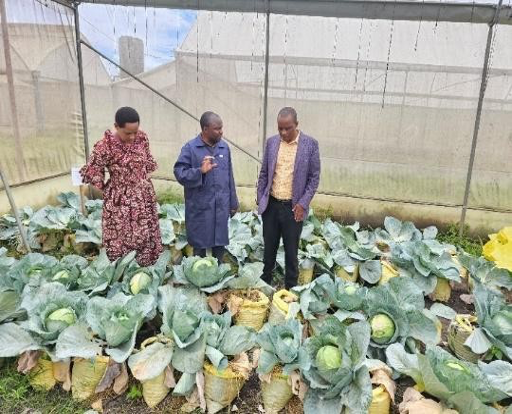
Scientists at NM-AIST have developed a botanical bactericide from cashew nut shell liquid as a hopeful way of protecting cabbage plants and creating value from agricultural waste.
The Problem: A Disease that Devastates Cabbage Farmers
Black rot disease poses a serious threat to cabbage production, quality and income for many cabbage farmers in Tanzania.
The disease is caused by a bacterium called Xanthomonas campestris pv. campestris that attacks cabbage plants. The disease can spread rapidly under favorable conditions making it hard for farmers to manage.
“During severe outbreaks, it is possible to have crop losses of 70-100 percent, which could have a devastating impact on the farmer’s livelihood and the market value of their produce,” the research team’s submission states.
Traditional means of disease control, such as chemical and cultural practices, have shortcomings. Concerns about chemical exposure, environmental effects and resistance development have led to increased interest in alternative methods of crop protection.
Faced with these challenges, researchers at the Nelson Mandela African Institution of Science and Technology (NM-AIST) tried another option: Could a by-product of cashew processing be turned into a useful solution for protecting cabbage crops?
From Agricultural Waste to Scientific Discoveries
Andambike Emmanuel Mwakilema started the research in January 2025 in partnership with Dr. A. Aloyce and Prof. E. Mbega from NM-AIST’s School of Life Sciences and Bioengineering (LiSBE).
Mwakilema’s studies in plant disease identification and management at NM-AIST motivated him to look for a practical and locally available solution to cabbage black rot.
The study focused on cashew nut shell liquid – a substance obtained from cashew nut shells, containing natural compounds which may have antimicrobial properties.
In the lab, the team tested if these compounds could inhibit the bacterium which causes black rot disease.
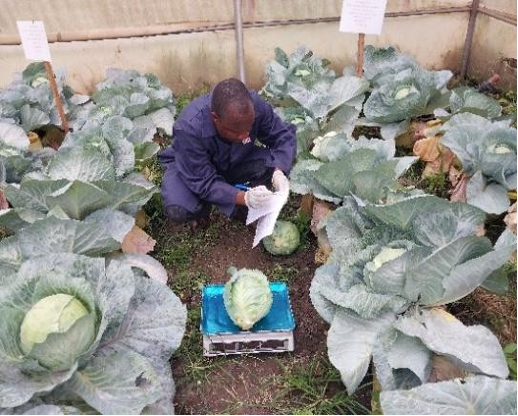
Following the encouraging laboratory results, the researchers moved on to screenhouse trials to assess the capability of the formulation to manage the disease in cabbage plants.
The investigations led to the creation of a botanical bactericide in June 2026, showing the possibility of transforming an agricultural by-product into a crop-protection technology.
The Innovation: From Cashew Nut Shell Liquid to a Botanical Bactericide
The innovation, named “Method for Formulating a Botanical Biopesticide for the Control of Cabbage Black Rot,” employs cashew nut shell liquid as the foundation for a botanical bactericide.
In simple terms, the formulation is designed to disrupt the bacteria that cause black rot of cabbage, limiting their ability to multiply and spread.
The technology has 3 important features:
1. Plants for protecting crops
This formulation attacks the disease-causing bacterium using compounds from cashew nut shells.
2. Utilization of agricultural wastes
The innovation permits the productive use of materials from the cashew-processing industry, converting the cashew nut shells into a potentially valuable agricultural input.
3. Potential for local manufacture of disease management products
Subject to production, safety and commercial feasibility assessments, locally available raw materials could support the future development of affordable botanical crop-protection products.
The innovation is meant to give growers another option for controlling black rot of cabbage and to promote more sustainable farming methods.
Why It Matters: Safeguarding Farmers and Turning Waste into Value
Beyond cabbage production, this innovation has potential benefits.
This could be another way for cabbage farmers to deal with black rot disease, helping to maintain the quality of their crops and reducing production losses.
This provides an opportunity for cashew processors to generate economic value from cashew nut shells and to improve agricultural utilization of resources.
For agricultural input manufacturers the technology may open up opportunities to develop locally produced botanical crop protection products.
It gives a basis for further studies of plant-derived disease-management technologies by researchers and agricultural extension services.
The innovation shows how scientific research can provide solutions across multiple agricultural value chains by linking cashew processing and vegetable production.
It also adheres to circular-economy principles, investigating the potential of transforming agricultural waste into valuable products.
From Lab Research to Promising Outcomes
2025 and 2026 the innovation was tested in laboratory and screenhouse trials at NM-AIST in Arusha.
The researchers found that the botanical bactericide:
– 90% inhibition of Xanthomonas campestris pv. campestris in laboratory tests.
– screenhouse treatment performed the best, with about 86% disease-management effectiveness.
– Low phytotoxic effects observed at screenhouse conditions.
These results are encouraging regarding the potential of the formulation for the management of cabbage black rot, but they need to be further tested under open field conditions.
The research at the laboratory stage was supported by a International Development Research Center (IDRC)-funded project (2025–2026).
The innovation had been granted patent approval by the Business Registrations and Licensing Agency (BRELA), under patent reference TZ/P/2026/00032, in June 2026.
Collectively, these accomplishments are a sign of advancement toward developing a homegrown agriculture disease-management solution.
What’s Next? From Research to Farmers’ Fields
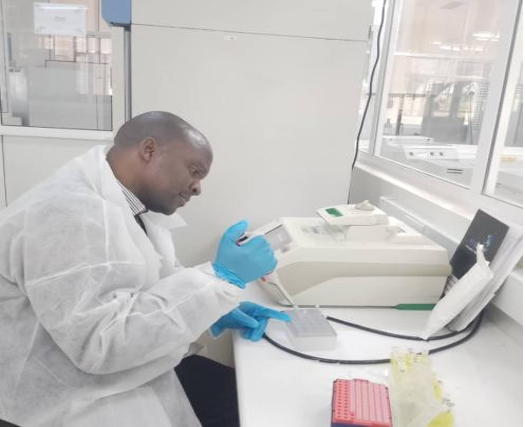
The botanical bactericide has given good results in the experiments, but needs to be developed further before it can be put on the market.
The research team is now preparing for more field trials to test the formulation’s performance under real farming conditions.
Other priorities include product refinement, safety and quality assessments, regulatory registration and preparations for commercial manufacturing.
The researchers are looking for strategic alliances to help support these activities and bring the technology closer to practical application.
If validated and commercialized successfully, the innovation could provide cabbage farmers with an additional crop-protection option, while creating new economic opportunities in the cashew-processing industry in Tanzania.
The research is yet another demonstration by NM-AIST of how agricultural challenges can inspire scientific solutions from locally available resources.
Innovation at a Glance
| Innovation | Cashew Nut Shell-Based Botanical Bactericide |
| Lead Innovator | Andambike Emmanuel Mwakilema |
| Research Team | Dr. A. Aloyce and Prof. E. Mbega |
| Institution | Nelson Mandela African Institution of Science and Technology (NM-AIST) |
| School | Life Sciences and Bioengineering (LiSBE) |
| Research Started | January 2025 |
| Year Developed | June 2026 |
| Sector | Agriculture, Biotechnology, Environmental Management and Manufacturing |
| Technology | Botanical bactericide formulated from cashew nut shell liquid |
| Target Disease | Cabbage black rot |
| Target Pathogen | Xanthomonas campestris pv. campestris |
| Laboratory Result | 90% bacterial inhibition |
| Screenhouse Result | Approximately 86% disease-management effectiveness |
| IP Title | A Method of Formulating a Botanical Biopesticide for Controlling Cabbage Black Rot |
| IP Reference | TZ/P/2026/00032 |
| Reported Patent Approval | June 2026 |
| Development Stage | Experimental validation completed; further field testing required |
| Research Support | IDRC-funded project (2025–2026) |
| Potential Beneficiaries | Cabbage farmers, cashew processors, agricultural input manufacturers and researchers |
Join Us
NM-AIST welcomes collaboration with agricultural research institutions, agrochemical and biotechnology companies, cashew processors, investors, government agencies and development partners interested in promoting this innovation.
Current collaboration opportunity: Help with field validation, product refinement, regulatory registration and commercialization of the botanical bactericide.
Transforming agricultural waste into opportunities for sustainable crop protection and agricultural innovation.