
Two improved Lablab bean varieties developed by NM-AIST-led research now give Tanzanian farmers new opportunities to improve food security, nutrition and adaptation to changing rainfall patterns.
The Problem: Farming in a Changing Climate
Agriculture is becoming harder for many smallholder farmers in Tanzania as rainfall becomes unpredictable and dry spells lengthen.
Crops that once provided reliable harvests are now more vulnerable to changing weather patterns, threatening household food security, nutrition and income.
But Africa has its own indigenous crop that has incredible potential to stand up to these challenges: Lablab (Ngwara).
Lablab is a nutritious and versatile legume that can tolerate long dry spells and resume growth when rain returns. The beans are a food . The leaves and vine are used as stock feed and also improve the fertility of the soil .
But Lablab has remained underutilized in Tanzania, even with these advantages. As the common bean increased in popularity, the traditional Lablab cultivation declined and valuable agricultural knowledge disappeared.
Prior to this research, no registered Lablab variety had been officially released in Tanzania limiting farmers’ access to certified seeds with known characteristics and performance.
Realizing this opportunity, researchers at the Nelson Mandela African Institution of Science and Technology (NM-AIST) embarked on a search for improved varieties that could help farmers build resilience against climate change.
From Forgotten Crop to Scientific Discovery
The research journey started in 2016 under the leadership of Prof. Pavithravani B. Venkataramana, along with Prof. Patrick A. Ndakidemi, Mr. Neil R. Miller and Mr. Wilfred Mariki, from NM-AIST’s School of Life Sciences and Bioengineering (LiSBE), Sustainable Agriculture Research Group.
Researchers, working with ECHO East Africa and Tanzania Agricultural Research Institute (TARI) Selian, investigated the potential of different Lablab varieties to perform under farming conditions in Tanzania.
The researchers started with 30 accessions of Lablab and then selected the six most promising for further investigation.
These varieties were evaluated in advanced yield trials at three locations in northern Tanzania from 2016 to 2018.
Then from 2018 to 2019, the research moved to on-farm trials across six locations where farmers were able to help evaluate the varieties based on their performance, suitability and consumer preferences.
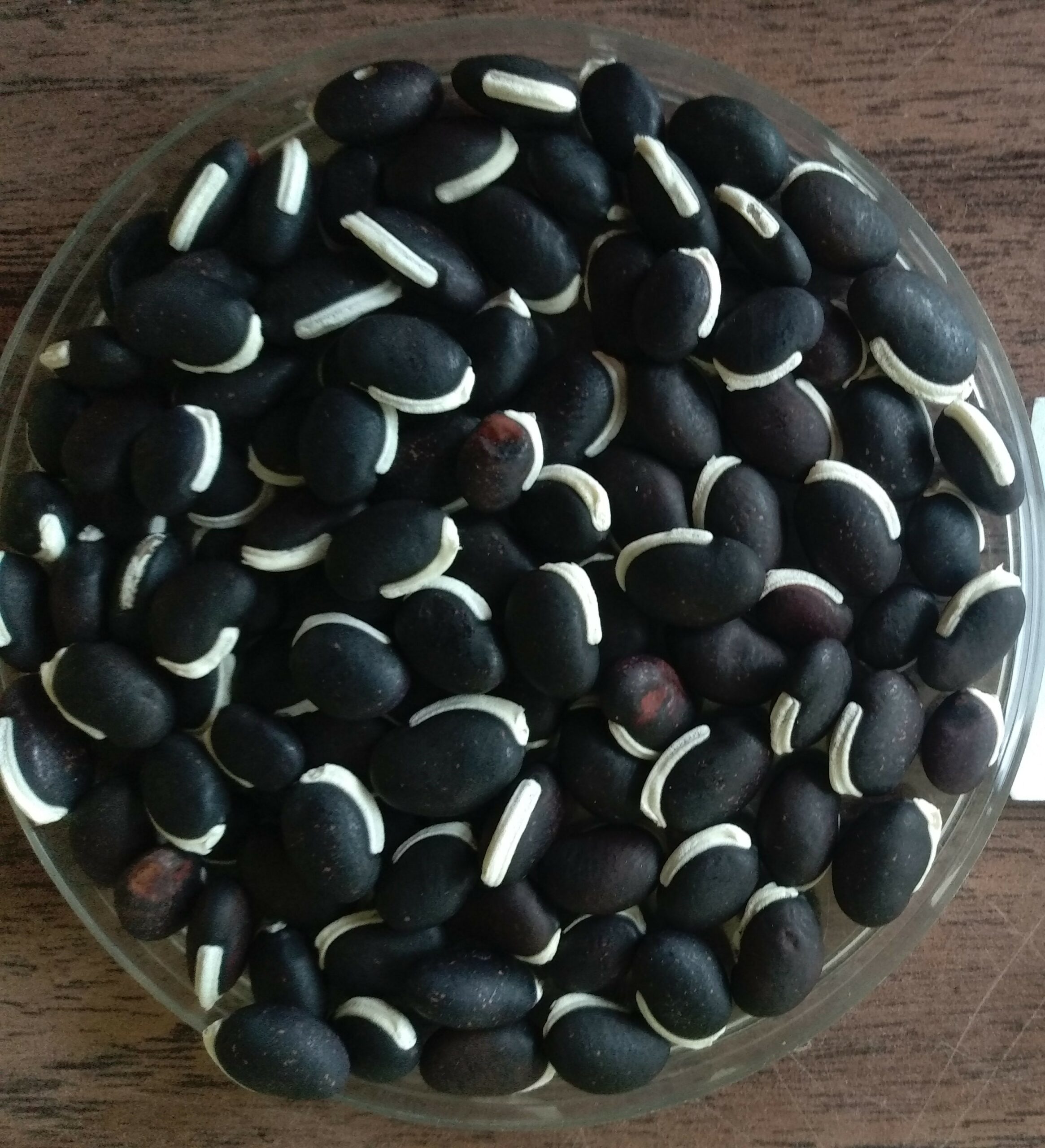
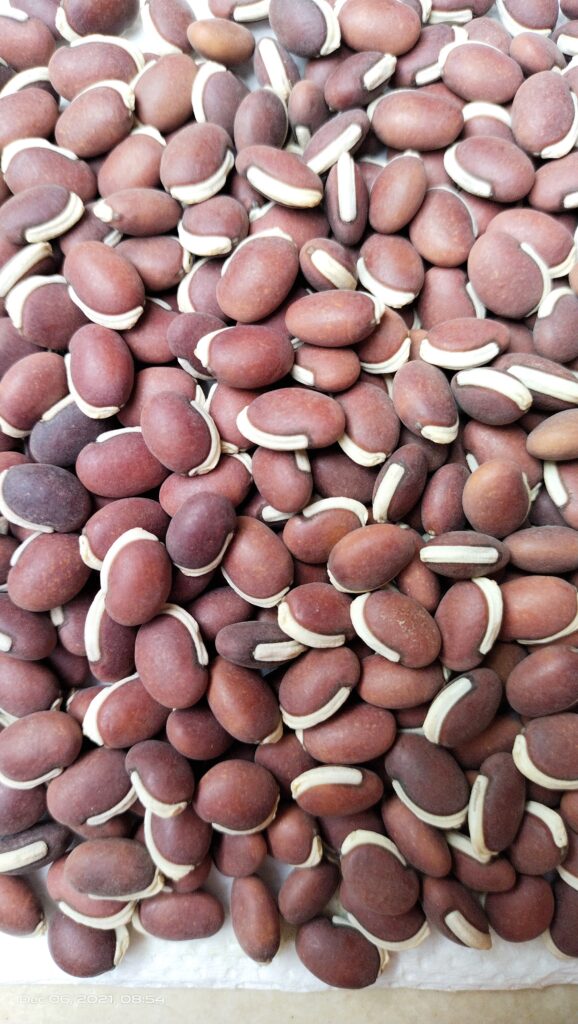
Two varieties that were particularly promising were: Karamoja Red and Eldoret G1 Black 2.
The varieties were released in 2020 as NM-D19 and NM-D20 after successful performance evaluation and official testing and approval through the national seed regulatory processes in Tanzania.
The release was a major milestone: it was the first Lablab varieties officially released in Tanzania and the first crop varieties released by NM-AIST.
hw-remosaic: 0;
touch: (-1.0, -1.0);
modeInfo: ;
sceneMode: SFHDR;
cct_value: 0;
AI_Scene: (4, -1);
aec_lux: 186.91791;
hist255: 0.0;
hist252~255: 0.0;
hist0~15: 0.0;
Innovation: Two Improved Bean Varieties for Climate-Smart Farming
The innovation consists of two improved Lablab (Lablab purpureus) varieties chosen for their adaptability, productivity and suitability for farmers and consumers.
Both are able to survive long dry spells and resume growing when the rains come, offering hope to places with unreliable rainfall.
They also offer multiple benefits such as household food, fodder for livestock and soil fertility support.
NM-D19: Karamoja Red
The NM-D19 is characterized by red seeds and white flowers.
The variety performed well in field trials and was highly preferred by consumers in Tanzania.
Reported characteristics include:
- Red colored seeds.
- Pods with around 3-4 seeds.
- Blooms in 65 to 85 days.
-peak harvest 140-180 days. - Approximately 3-4 crops.- Reported seed yields of 1 to 1.6 tons per acre.
NM-D20: Eldoret Black
The NM-D20 has black seeds and purple blossoms.
In Kenya, the variety showed promising agricultural performance and high market preference ratings.
Characteristics reported:
– Seeds are black colored.
– Pods with 3-4 seeds.
– Days to flowering: 58-102 days.
– 140-180 days to peak harvest.
– 3-4 harvests or thereabouts.- Reported seed yields of 1 to 1.4 tons per acre.
Both types can be cooked and eaten like common beans, and their foliage can be used as livestock feed, especially during dry periods.
Why it matters: Improving food security, nutrition and farmer resilience
This innovation is not only important for the two new varieties of beans.
The varieties offer smallholder farmers a way to diversify crop production with legumes more adapted to extended dry spells.
For households Lablab provides an extra source of plant-based protein, which could contribute to improving dietary diversity and nutrition.
For livestock keepers: Its leaves and vines provide an alternative source of fodder, especially when pasture is in a limited supply in dry seasons.
In agricultural systems Lablab can be included in farming systems that improve soil fertility, for example, intercropping with maize.
Also, the varieties have commercial possibilities. Lablab already has a regional market established, especially in Kenya, which offers potential for farmers and seed producers to benefit from increased production and better availability of seed.
The innovation helps adapt to climate change, diversify agriculture and ensure sustainable food production by improving the availability of quality seeds of a traditional African crop.
From Research to Official Recognition and Farmer Adoption
Both varieties successfully passed the mandatory Distinct, Uniform and Stable (DUS) testing and National Performance Trials conducted under Tanzania’s formal seed regulatory system after extensive field evaluation.
They were the first registered Lablab varieties in Tanzania, released in 2020.
On 14 March 2023 NM-AIST was granted Plant Breeders’ Rights for the two varieties:
– NM-D19. Reg. No. 144.
– NM-D20. No. 143.
These rights formally confirm ownership of the two protected varieties by NM-AIST.
Since their release, the varieties have been introduced to farmers and distributed on a limited basis for demonstration and feedback.
Selected schools in Arusha, a prison farm and larger farmers have also been provided with seeds as part of on-going promotional and field activities.
The research has also been supported by the Tanzania Commission for Science and Technology (COSTECH) through the project “From Farm to Fork: Promotion of Sustainable Food Systems with Lablab as a Climate Resilient Crop in Tanzania.”
This support offers another opportunity to enhance the crop’s part in sustainable food systems.
What’s Next? Getting Quality Seeds into More Farmers’ Hands
The varieties have been officially released and are already being grown, but wider adoption depends on increasing availability of certified seed.
The second priority is to increase seed multiplication, starting with the maintenance of breeder seed and the production of pre-basic seed.
NM-AIST plans to collaborate with the Agricultural Seed Agency (ASA), research institutions, seed companies and contract farmers to upscale basic and certified seed production.
“These partnerships will help to make quality seeds available to more farmers while supporting commercial opportunities under the NM-AIST brand.”
Wider distribution of NM-D19 and NM-D20 could help more farming communities adjust to fluctuating climate conditions, improve household nutrition and access new agricultural markets.
By turning the spotlight on an underutilized African crop, NM-AIST is showing how research can conserve valuable agricultural resources while providing practical solutions to today’s food security challenges.
Innovation at a Glance
| Innovation | Climate-Resilient Lablab (Ngwara) Varieties – NM-D19 and NM-D20 |
| Lead Researcher | Prof. Pavithravani B. Venkataramana |
| Research Team | Prof. Patrick A. Ndakidemi, Mr. Neil R. Miller and Mr. Wilfred Mariki |
| Institution | Nelson Mandela African Institution of Science and Technology (NM-AIST) |
| School | Life Sciences and Bioengineering (LiSBE) |
| Research Group | Sustainable Agriculture Research Group |
| Research Started | 2016 |
| Year Released | 2020 |
| Sector | Agriculture, Climate Adaptation, Food Security and Nutrition |
| Variety 1 | NM-D19 – Karamoja Red |
| Variety 2 | NM-D20 – Eldoret Black |
| Intellectual Property | Plant Breeders’ Rights |
| NM-D19 Registration | No. 144 |
| NM-D20 Registration | No. 143 |
| Rights Granted | 14 March 2023 |
| Rights Holder | NM-AIST |
| Development Stage | Officially released and in limited-scale use |
| Research Partners | ECHO East Africa and TARI Selian |
| Research Support | COSTECH |
| Next Priority | Certified seed multiplication and wider distribution |
| Potential Beneficiaries | Smallholder farmers, livestock keepers, consumers and seed producers |
Join Our Team
NM-AIST is open to working with agricultural research institutions, seed companies, the Agricultural Seed Agency, investors, development partners and farming organizations interested in increasing the availability of climate-resilient Lablab varieties.
Current Partnership Opportunity: To support maintenance of breeder seed, production of pre-basic and certified seed and multiplication and distribution of NM-D19 and NM-D20 seed to farmers across Tanzania.
Science, innovation and climate-resilient farming to revive Africa’s agricultural heritage