
New local technology converts organic waste into biogas and organic fertilizer offering promising solutions to sustainable waste management, clean energy and agriculture.
The Problem: Organic Waste Becomes a Problem
Organic waste is generated daily by households, institutions and urban communities, which poses an increasing challenge for waste management.
But much of the waste here contains valuable resources that could be recovered and put to good use.
The traditional method of converting organic waste to compost takes 20 to 90 days depending on the feedstock and operating conditions. Researchers and manufacturers also face issues in controlling the environmental conditions necessary for effective processing, impacting efficiency and output quality.
To overcome these limitations, researchers at the Nelson Mandela African Institution of Science and Technology (NM-AIST) have developed a faster, more efficient and automated approach to converting organic waste into useful products.
The study was conducted by Dr. Petro Mwamlima alongside Prof. Mwemezi Rwiza and Prof. Karol Njau, all from the School of Materials, Energy, Water and Environmental Sciences (MEWES) at NM-AIST. They investigated how automation could be used to enhance the conversion of organic waste into valuable resources.
The team drew inspiration from the challenges identified through community and industry engagement to work on developing a system that could better control processing conditions and reduce time required for biogas and organic fertilizer production.
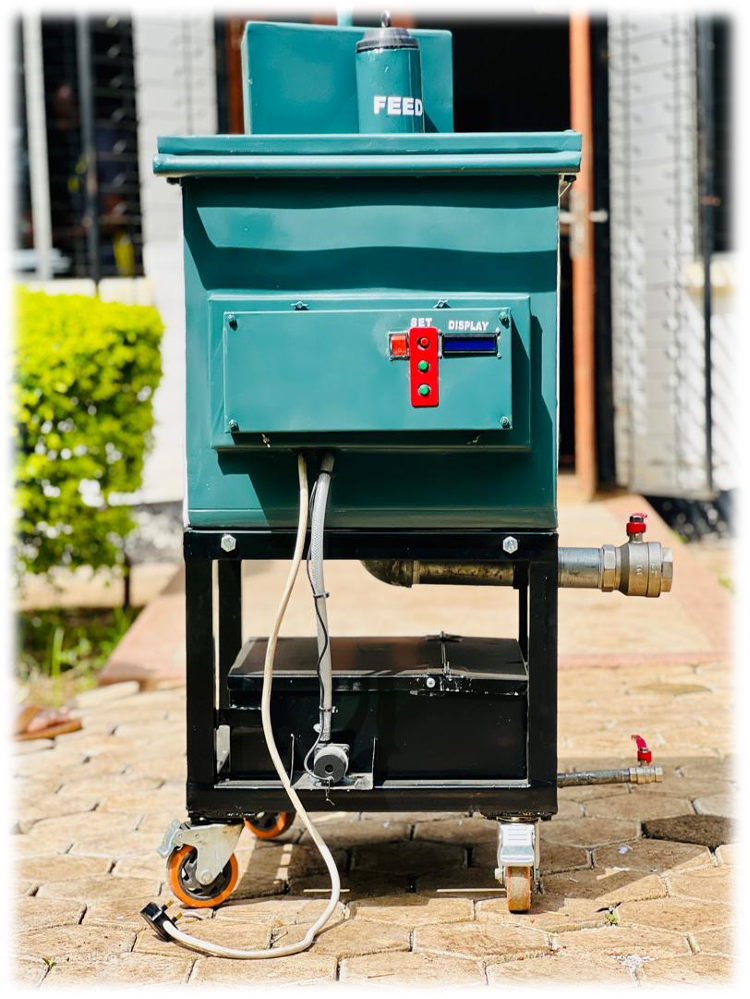
Their work led to the development of a Automated Dual Reactor for Rapid Biogas and Biofertiliser Production in 2023.
This innovation integrates automated operation and controlled processing conditions in a single machine, providing a novel approach for managing organic waste and recovering useful resources.
The Novelty: One Machine Produces Two Valuable Products
The automated dual reactor is designed to produce two useful products from organic waste: biogas and organic fertilizer.
As opposed to classical systems, which may be highly dependent on external environmental conditions and human intervention, the reactor has automated controls to maintain suitable conditions during the production process.
The technology is intended to generate:
1. Energy from biogas
Organic waste is converted into biogas, a renewable energy source that can be used for cooking and other applications.
2. Organic fertilizer for agriculture
The system also generates organic fertilizer to support soil fertility and sustainable agricultural methods.
The reactor is capable of generating biogas and compost in about 2–10 days depending on the processing conditions, according to the research team’s submission.
The system has the output capacity of around 0.75-2 kilograms of biogas from 50 liters of domestic waste.
The technology is designed for low power consumption and lower operational and maintenance needs. It is a potential alternative for institutions and communities seeking more efficient organic waste processing solutions.
Why It Matters: Waste Management, Clean Energy and Agriculture are Connected
This innovation addresses three key development priorities in a single technology.
For municipalities and urban communities it represents a potential solution to manage organic waste more productively and to alleviate the pressure on conventional disposal methods.
Biogas production can be an additional source of energy for cooking and other appropriate household and institutional uses.
The organic fertilizer produced can assist farmers in managing soil fertility and in sustainable agricultural production.
The technology could be of particular interest to schools, higher learning institutions, local government authorities and communities generating organic waste.
In addition, the dual reactor helps to establish circular-economy practices, where waste is regarded as a resource, not just a disposal problem, by turning discarded materials into useful resources.
From Research to Real-World Application
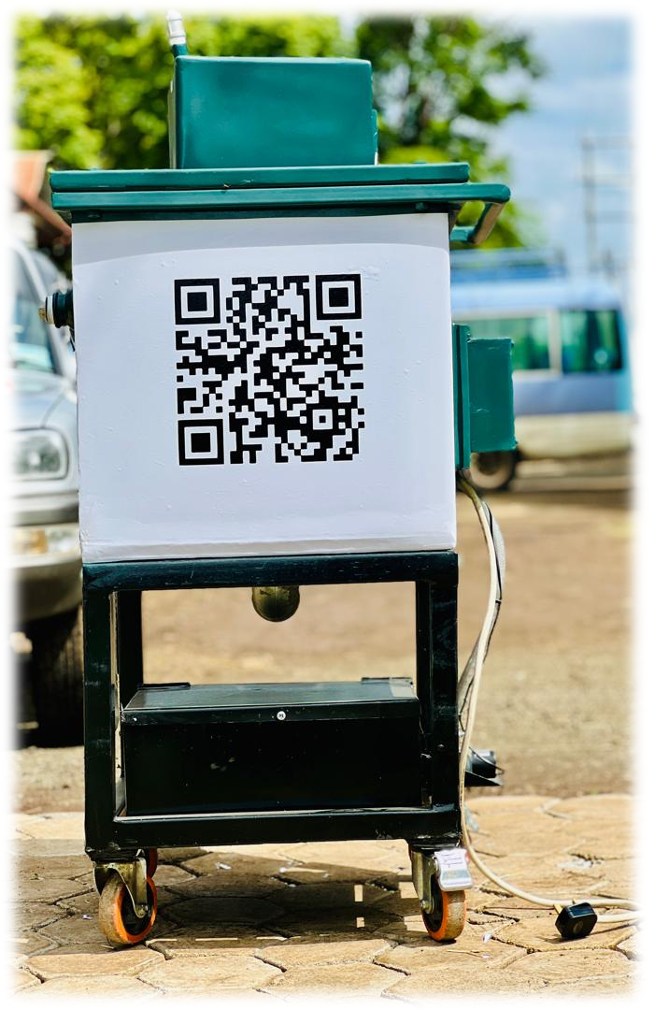
The automated dual reactor has evolved from initial development to pilot usage and market testing.
The technology was validated at Arusha Technical College and Apex Electronics Arusha, providing an opportunity to evaluate its application beyond the laboratory.
On 10 June 2024 the patent protection was granted to the innovation named “Automated Machine for Rapid Production of Biogas and Organic Fertilizer.”
The patent, filed under the number TZ/P/2023/00013 NM-AIST as patent owners and Dr. Petro Mwamlima, Dr. Mwamlima, Prof. Karol Njau and Prof. Mwemezi Rwiza as inventors.
This achievement is a significant step forward in safeguarding the technology as it moves toward wider use.
What Comes Next? Scaling Up for Tanzania’s Growing Cities
Next, with pilot application underway, the research team’s ambition is to push the technology toward large-scale commercialization.
Facilitating uptake in major urban centers, particularly Dodoma, Arusha and Dar es Salaam is a key priority, where organic-waste management provides opportunities for more sustainable solutions.
Researchers are looking for support to ramp up production and deployment of the automated reactors, which could have applications in municipalities, schools, industries and other facilities that generate waste.
Broader use could help better manage organic waste, increase access to renewable energy and step up production of organic fertilizer.
This innovation shows once again how technologies developed locally at NM-AIST can be a catalyst for transforming environmental issues into practical opportunities for sustainable development.
Innovation at a Glance
| Innovation | Automated Dual Reactor for Rapid Biogas and Biofertiliser Production |
| Lead Innovator | Dr. Petro Mwamlima |
| Research Team | Prof. Mwemezi Rwiza and Prof. Karol Njau |
| Institution | Nelson Mandela African Institution of Science and Technology (NM-AIST) |
| School | Materials, Energy, Water and Environmental Sciences (MEWES) |
| Year Developed | 2023 |
| Sector | Environmental Management, Renewable Energy and Agriculture |
| Technology | Automated organic-waste processing reactor |
| Primary Outputs | Biogas and organic fertiliser |
| Reported Processing Time | 2–10 days |
| Patent Title | Automated Machine for Rapid Production of Biogas and Organic Fertilizer |
| Patent Number | TZ/P/2023/00013 |
| Patent Granted | 10 June 2024 |
| Patent Owners | NM-AIST and Dr. Petro Mwamlima |
| Development Stage | Market testing |
| Pilot Location | Kamal Estate Industry, Bagamoyo |
| Potential Users | Municipalities, schools, higher learning institutions, industries and households |
Join us
NM-AIST welcomes collaboration with local government authorities, waste-management companies, renewable energy organizations, manufacturers, investors and development partners who are interested in supporting wider deployment of this innovation.
Partnership opportunity: We are seeking to support large-scale commercialization and uptake of automated dual reactors in major urban centers in Tanzania, notably Dodoma, Arusha and Dar es Salaam.
Organic waste turned into cleaner energy, valuable agricultural resources and sustainable opportunities.