
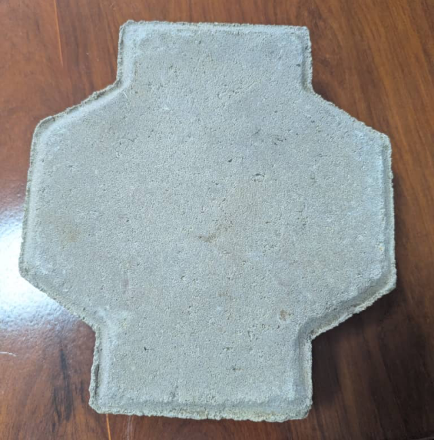
Researchers at NM-AIST have developed a patented method of producing Portland pozzolana cement using activated bentonite. The promising method can reduce carbon emissions, energy consumption and production costs while enhancing cement strength.
Challenge: Making Cement Production More Sustainable
Cement is one of the most important construction materials today, underpinning the development of homes, roads, schools, hospitals and other essential infrastructure.
But making traditional Portland cement is energy-intensive and natural-resource-intensive, and produces a lot of carbon dioxide emissions.
The production of clinker, a key ingredient in cement production, in which raw materials are heated up to very high temperatures, causes a major part of these environmental impacts.
As Tanzania continues to expand its infrastructure, a growing challenge is facing the construction industry: How to make cement more sustainably without compromising strength, durability or affordability?
This challenge was tackled by researchers at the Nelson Mandela African Institution of Science and Technology (NM-AIST) who started to look at the use of locally available geological materials to reduce dependence on clinker but still retain the performance required for construction.
From Geological Resources in the Local Area to Scientific Innovation
The research started in 2022 and was led by Tsion Amsalu Fode in collaboration with Yusufu Abeid-Chande Jande and Thomas Thomas Kivevele from the School of Materials, Energy, Water and Environmental Sciences (MEWES) at NM-AIST.
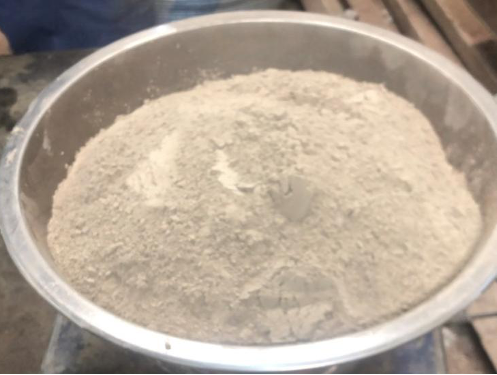
The team of researchers studied the potential of using bentonite, a naturally occurring clay mineral, as an alternative supplementary material in cement production, motivated by the need for more sustainable construction materials.
The researchers looked at how activated bentonite could be used to partially replace clinker, reducing the need for one of the most energy intensive components of traditional cement.
Their study resulted in the development of a new method for the manufacture of Portland pozzolana cement by activated bentonite, which was finished on 15 November 2023.
The innovation offers an opportunity to combine locally available mineral resources with scientific advances in materials engineering to enable more sustainable cement production.
The innovation: Making cement with less clinker
The innovation, officially named “Method for Production of Portland Pozzolana Cement Using Activated Bentonite,” provides a way to produce cement using activated bentonite as a supplementary cementitious material.
Simply put, the technology is designed to substitute a portion of the clinker content with processed bentonite, while maintaining or enhancing the performance of the final cement.
Bentonite is a natural clay which can be treated to improve its suitability for use in cementitious materials.
The innovation is the use of activated bentonite in the production of cement and has several possible benefits.
1. Cut down on carbon emissions
Cutting the amount of clinker used could reduce carbon dioxide emissions in cement production.
2. Less energy consumption
Partial clinker replacement has the potential to lower the energy needed to produce cement.
3. Enhanced cement strength
The research team says the strength is better than that of the conventional cement type used as a benchmark in its testing.
4. Possible cost savings
Activated bentonite as partial clinker replacement can reduce the cost of production.
5. Local resource use
The technology creates opportunities for Tanzania’s geological resources to contribute to the development of sustainable construction materials.
Together these features make the innovation a promising alternative for cement manufacturers who want to improve production efficiency and environmental performance.
Why It’s Important: Encouraging Green Building and Industrial Growth
The innovation has application in the construction and manufacturing industries in Tanzania.
For cement manufacturers it provides the opportunity to explore low-clinker production processes that could result in more efficient operations and a reduced environmental footprint.
For construction companies and infrastructure developers , A stronger and possibly more durable cement could aid the development of reliable buildings and infrastructure.
For government institutions, the technology, could play a role in efforts to promote sustainable housing, public infrastructure and environmentally responsible industrial development.
For bentonite miners and suppliers it offers opportunities to add further value to locally occurring geological materials.
For communities, successful commercialization could mean a supply of affordable and sustainable construction materials.
The innovation also supports broader efforts to reduce industrial carbon emissions and make manufacturing greener.
From research to measurable results and field trials
The research has gone beyond the initial stage of development to the stage of testing and pilot implementation activities.
The technology has been tested at Mbeya Cement Ltd. giving the research team an opportunity to evaluate its potential application in the cement industry, the team said in their submission.
The researchers report on the following performance achievements:
– Carbon dioxide emissions reduced by ~9% compared to conventional Portland cement.
Reduction in energy demand of approx. 45% compared with the manufacture of Portland clinker.
– Potential production cost savings of about 12%. – About 24% strength improvement in comparison with the reference cement type CEM II 42.5R.
These results show that activated bentonite could be important in the development of cement products with better performance and less environmental impact.
However, further industrial validation will be important to assess the consistency of such benefits on different manufacturing conditions.
The innovation was patented on 19 December 2024 under registration number TZ/P/2023/00152 with NM-AIST as the patent owner.
The research also received the Best Innovation of 2026 award at the 3rd Five University Consortium Conference, underscoring its ability to advance sustainable construction and industrial innovation.
What’s coming next? Scale up the innovation to industrial scale
We have patent protection, we have done some industry testing and now the next priority is to move the innovation to broader industrial application.
The research team is looking for strategic alliances with cement manufacturers, investors and other industry stakeholders to help with pilot-scale production, licensing and commercialization.
“Further collaboration could help to establish the manufacturing feasibility of the technology, its performance in commercial production conditions, and opportunities to adopt it in Tanzania’s cement industry.”
Successful industrial application could lead to lower-carbon cement production, greater use of local mineral resources and more sustainable infrastructure development.
The innovation also shows how research in materials science can be used to solve industrial challenges and support Tanzania’s move toward more environmentally friendly manufacturing at NM-AIST.
Innovation at a Glance
| Innovation | Portland Pozzolana Cement Using Activated Bentonite |
| Lead Innovator | Tsion Amsalu Fode |
| Research Team | Yusufu Abeid-Chande Jande and Thomas Thomas Kivevele |
| Institution | Nelson Mandela African Institution of Science and Technology (NM-AIST) |
| School | Materials, Energy, Water and Environmental Sciences (MEWES) |
| Research Started | 2022 |
| Year Developed | 15 November 2023 |
| Sector | Construction, Manufacturing, Materials Science and Environmental Sustainability |
| Technology | Activated bentonite as a supplementary cementitious material |
| Reported CO₂ Reduction | Approximately 9% |
| Reported Energy Reduction | Approximately 45% against Portland clinker manufacturing |
| Potential Cost Savings | Approximately 12% |
| Reported Strength Improvement | Approximately 24% against reference CEM II 42.5R cement |
| Patent Title | Method for Production of Portland Pozzolana Cement Using Activated Bentonite |
| Patent Number | TZ/P/2023/00152 |
| Patent Granted | 19 December 2024 |
| Patent Owner | NM-AIST |
| Development Stage | Industry testing and pilot/commercialisation activities |
| Industry Testing | Mbeya Cement Ltd. |
| Recognition | Best Innovation, 3rd Five University Consortium Conference, 2026 |
| Next Priority | Industrial partnership, pilot-scale production and commercialisation |
Collaborate With Us
NM-AIST is looking for collaborations with cement manufacturers, construction-material producers, investors, infrastructure developers and industrial partners with an interest in advancing sustainable cement technologies.
Partnership opportunity: Support pilot scale production, industrial validation, technology licensing and commercialization of activated bentonite based Portland pozzolana cement.
Stronger infrastructure with smarter materials and a lower environmental footprint.