
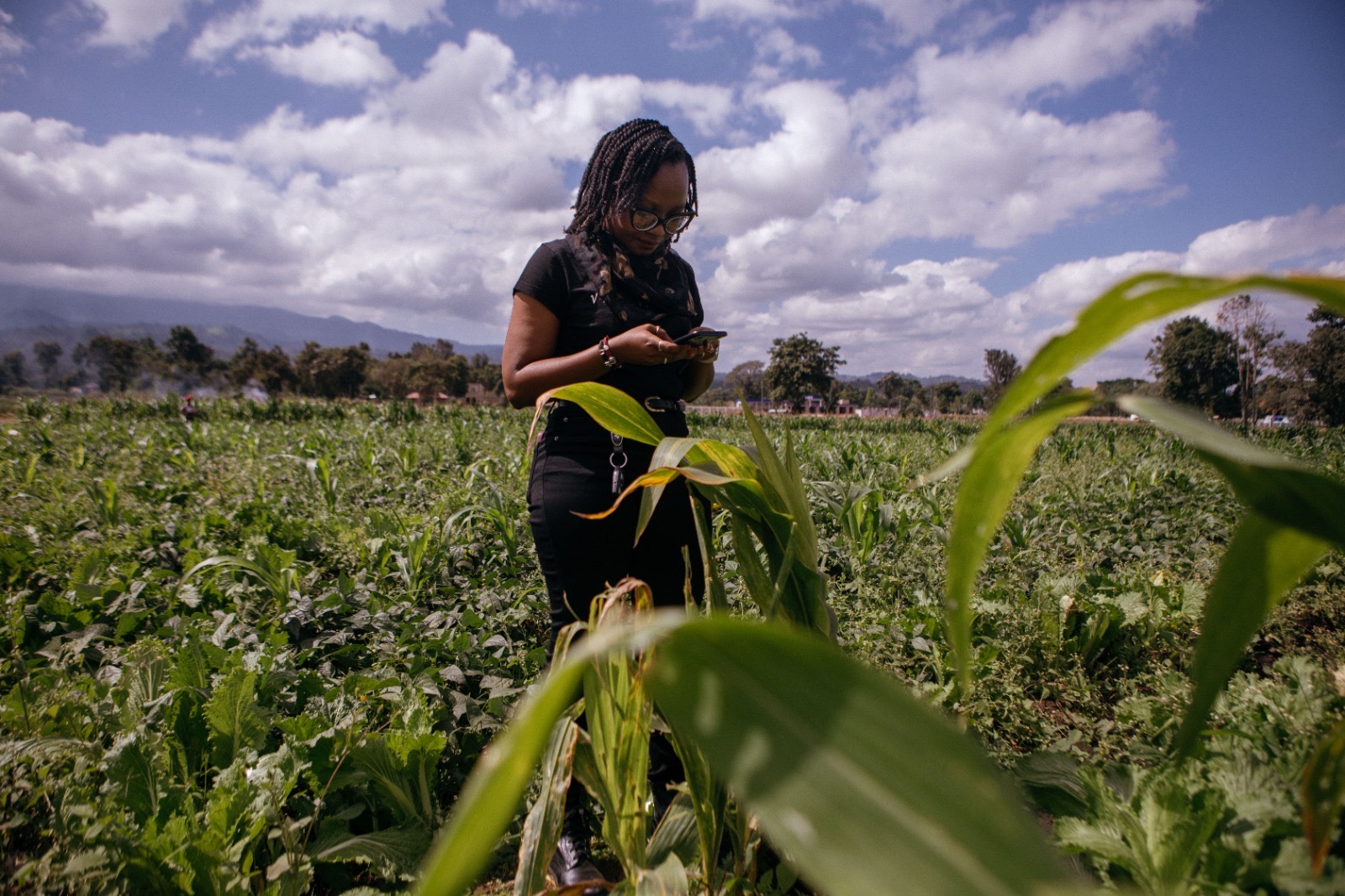
kilimoAI, developed at NM-AIST, is a mobile app that helps farmers identify crop diseases from images and provides timely guidance in Swahili to support healthier crops and more informed farming decisions.
The Challenge: When Farmers Fail to Identify Crop Diseases in Time
Early diagnosis of crop diseases is still a big problem for many smallholder farmers in Tanzania.
A farmer might notice strange spots, color changes in leaves or other signs of disease, but it is not always easy to work out the cause. Diseases can spread and damage harvests, household incomes and food security before the right action can be taken in the absence of agricultural expertise in a timely manner.
This challenge is particularly important for farmers growing maize and common beans, two key crops for food production and livelihoods in Tanzania.
Researchers at the Nelson Mandela African Institution of Science and Technology (NM-AIST) set out to investigate how Artificial Intelligence could make crop disease identification more accessible to the people who need it most, recognizing the gap between the needs of farmers and access to agricultural expertise.
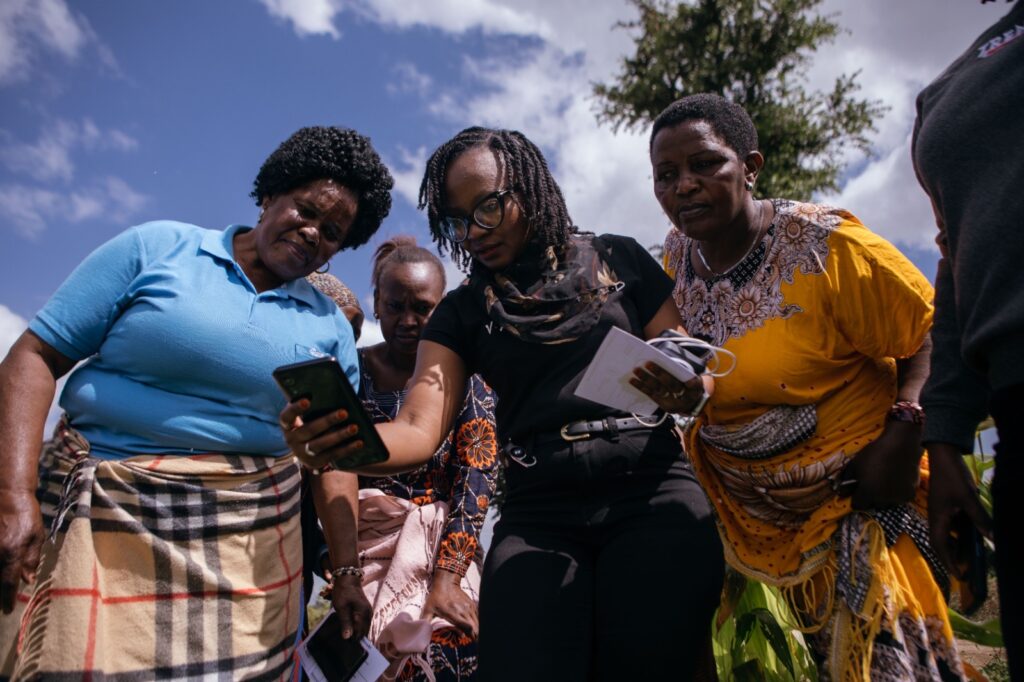
The question was simple: What if a farmer could take a picture of a sick leaf and get useful advice right on their mobile phone?
From Farming Challenge to Digital Innovation
The research journey started in 2023 and was led by Neema Mduma, a computer scientist at the College of Computational and Communication Sciences and Engineering (CoCSE) of NM-AIST.
Mduma was inspired by the challenges smallholder farmers face in identifying diseases and getting timely advice, and explored how artificial intelligence and recognition of images could help with decision-making in agriculture.
The research team collected images of healthy and diseased maize and common bean leaves from farms across Tanzania.
The images were reviewed and labeled with the help of agricultural experts and used to train AI models that can recognize visible signs of crop diseases.
The breakthrough was the researchers’ discovery of a lightweight AI model that could achieve high classification accuracy and also run on a mobile app.
The team then incorporated the technology into an app for the specific needs of Tanzanian farmers called kilimoAI, even adding guidance in Swahili.
In 2025, kilimoAI took the research and turned it into a practical digital tool that farmers and agricultural extension officers could use in the field.
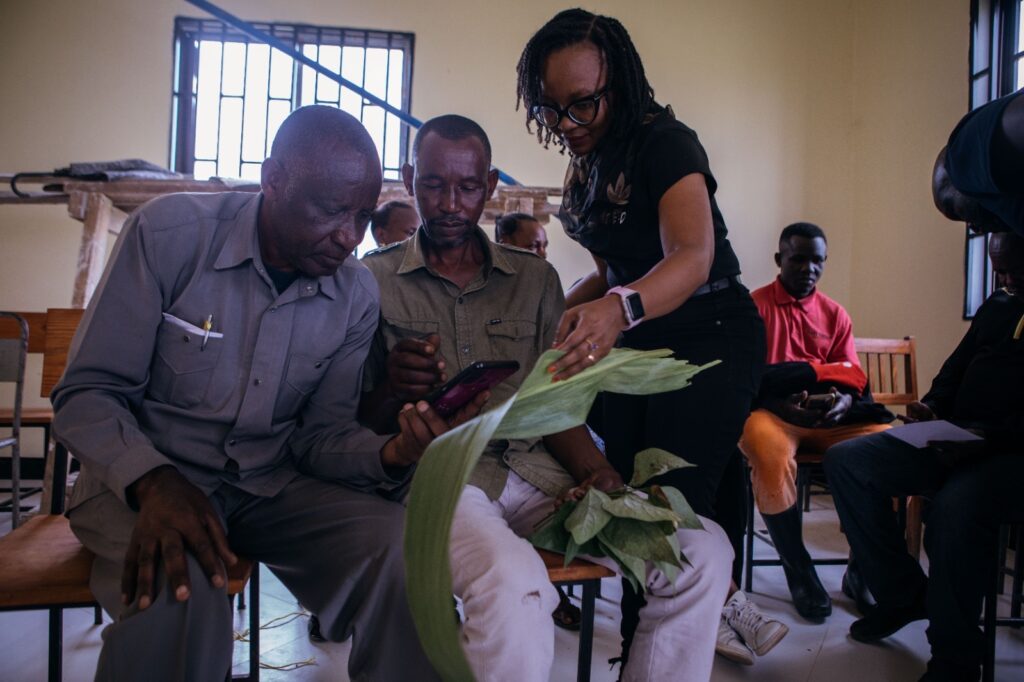
The Innovation: A Pocket Crop Disease Expert
kilimoAI is an AI-based mobile app that enables farmers to detect diseases in their maize and common bean crops.
The app utilizes recognition of images to scan photos of plant leaves to check for signs of possible disease.
It is designed to operate simply:
1. Snap a photo
A farmer or an agricultural extension officer takes or uploads with a mobile phone a photograph of a maize leaf or a common bean leaf.
2. Allow Artificial Intelligence to analyze the leaf
The app is comparing patterns in the photograph to information it learned from thousands of images of healthy and diseased crops.
3. Identify the probable disease
kilimoAI gives you an assessment of the possible disease affecting the plant in a short time.
4. Get directions in Kiswahili
The app provides practical suggestions to help farmers understand the issue and consider appropriate next steps.
The use of locally sourced crop images and guidance in Swahili makes kilimoAI particularly relevant.
The technology has been trained on photographs taken from Tanzanian farms, instead of relying on datasets created in other countries, helping make its development more responsive to local agricultural conditions.
The app is designed to complement agricultural extension services by providing farmers with easier access to information when professional assistance is not readily available.
Why It Matters: Closing the Agricultural Knowledge Gap
kilimoAI may revolutionize access to crop disease information for smallholder farmers.
Farmers can use the app to easily identify possible crop diseases earlier, enabling them to make timely decisions that could help protect their crops and livelihoods.
For agricultural extension officers, it is yet another digital tool to assist in disease identification and farmer advisory services during field visits.
Agricultural institutions and researchers The image datasets collected locally will be valuable resources for AI-based agricultural research.
For government agencies and development partners, the technology opens avenues to extend agricultural advisory services to communities still lacking access to experts.
KilimoAI is already contributing to efforts to make scientific knowledge more accessible to farming communities and more useful by making crop disease information available through mobile technology and in Swahili. ## Bringing Research to Real-World Impact
Unlike many technologies still in the early stages of development, kilimoAI has already been put to practical use.
The application has been tested and used by farmers and agricultural extension officers in different areas of Tanzania such as Arusha, Kilimanjaro, Manyara, Mbeya, Iringa and Ruvuma.
Field activities undertaken from 2023 to 2025 supported image collection, model validation and improvements based on feedback from farmers and extension officers.
The research team highlights several major accomplishments:
– 63,000 users by August 2025.
– Collected over 500,000 crop leaf images from Tanzanian farms between November 2023 and December 2025.- In research, the chosen AI model achieved 99.89% classification accuracy in evaluation.
– Open access datasets of crop diseases to promote further research and development.
The reported model performance is promising, but more field validation is needed to assess its performance in different agricultural contexts.
Such accomplishments demonstrate how locally developed Artificial Intelligence can tackle real-life problems in agriculture.
From Tanzania to Global Fame
The development of KilimoAI has been acknowledged beyond Tanzania, demonstrating the growing contribution of African researchers to Artificial Intelligence and digital agriculture.
The innovation and its principal investigator have received several major awards, grants and honors.
In 2023, the project was funded by Grow Further to research machine-learning tools for early detection of maize and common bean diseases as part of climate change adaptation efforts in Tanzania.
More funding was secured from Grow Further in 2026 to enable scaling of kilimoAI for early diagnosis of maize and common bean diseases in Northern Tanzania.
The lead researcher of the innovation, Neema Mduma has also gained international recognition including:
– Africa’s 40 Under 40 AI Achievers (2025) – Society for AI.
– Innovate for Impact Outstanding Scholar (2026) – International Telecommunication Union (ITU).
– 20 Amazing Women Impacting The Future of Data and AI in Africa (2026) – Data Community Africa.
– Community Impact — kilimoAI’s recognition in relation to Bill Gates, Heroes in the Field (2026).
The innovation was also highlighted in Nature in November 2025, bringing international attention to the use of AI to help Tanzanian farmers.
These achievements show how research originating from NM-AIST can attract global attention, while still focusing on solving problems in local communities.
The innovation is also associated with the intellectual property reference TZ/P/2026/000051 entitled, “A System and Method for Early Detection of Plant Diseases.”
What’s Next? Scaling Up to More Farmers in Tanzania
kilimoAI is already being used, and the next priority is to increase its reach and improve its capabilities.
The research team is also working on collecting more images of crops, improving the AI models and extending the application to recognize more diseases and crops.
Another key focus is to strengthen partnerships with agricultural institutions, extension services and farmer organizations to support wider adoption .
The researchers are also looking for sustainable funding to support field validation, farmer training and further development of the application.
The long-term aim is to provide reliable crop disease information to more smallholder farmers across Tanzania, so that they can make better decisions and respond to crop health problems earlier.