
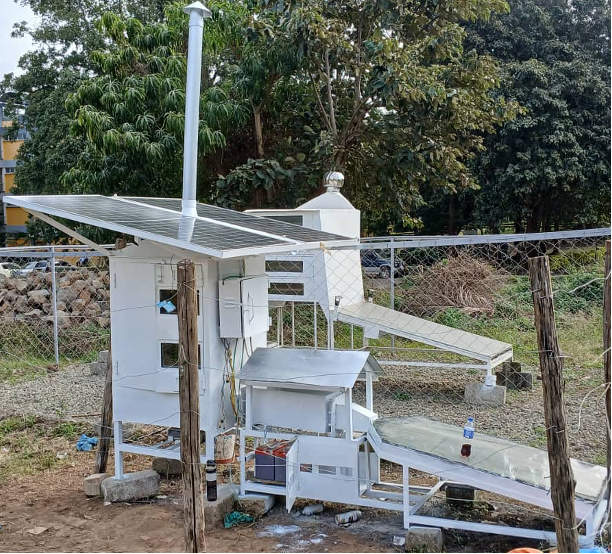
Researchers at NM-AIST have created an innovative solar-powered drying system to reduce drying time, conserve forests and improve efficiency for tobacco and horticultural farmers.
The Problem: The Environmental Cost of Drying Tobacco the Old Way
In Tanzania, drying harvested tobacco still takes time and relies heavily on firewood for many tobacco farmers.
Drying using traditional methods and firewood can take up to 10 days per batch, using large amounts of wood and contributing to deforestation and greenhouse gas emissions.
Beyond its environmental effects, the long drying time creates operational difficulties for farmers, hampering efficiency and requiring more resources to get tobacco to market.
Challenges have led researchers at the Nelson Mandela African Institution of Science and Technology (NM-AIST) to explore how renewable energy could be a more efficient and environmentally responsible alternative.
From Research to Innovation
The research began in 2024, under the leadership of Seuri Saiguran Kilakoi and the team of Prof. Thomas Thomas Kivevele, Dr. Baraka Kichonge and Dr. Mtaki Thomas Maagi all from the School of Materials, Energy, Water and Environmental Sciences (MEWES) at NM-AIST.
The team concentrated on developing a drying technology based on solar energy, rather than mainly relying on firewood.
Their work led to the development of a Solar-Photovoltaic Dryer for Tobacco and Horticultural Products in 2025.
The invention integrates solar-powered technology with a specially designed multistage drying system to improve drying efficiency and product quality while reducing energy consumption.
The Innovation: Solar Drying of Agricultural Produce
The solar-photovoltaic dryer is a device that uses solar energy to control the drying of tobacco and possibly other horticultural products.
The system is specifically designed with glass baffles in various configurations to optimize the drying process.
The technology uses solar energy as an alternative to the conventional drying by fire wood and can reduce the processing time and environmental impact.
One of its most promising reported achievements is its capacity to reduce the drying period from about 10 days to less than 2 days.
This improvement could allow farmers to shorten drying cycles and reduce their reliance on wood fuel.
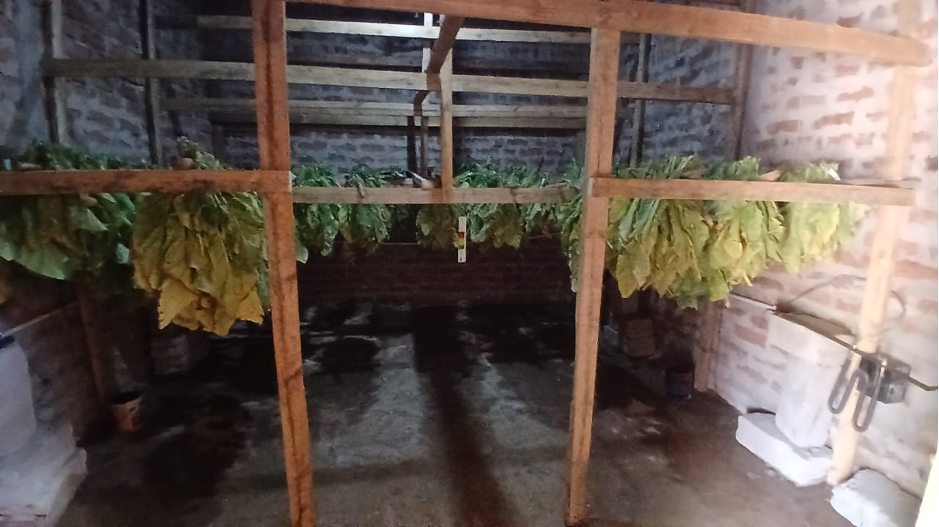
Why it Matters: Saving Time, Saving Forests, Helping Farmers
The innovation can pay off for farmers and the environment.
Shorter drying periods could also improve operational efficiency for tobacco farmers by reducing processing delays and creating opportunities for better returns from their produce.
Replacing or reducing firewood consumption for the environment could, at least, help reduce the cutting of trees and greenhouse gas emissions associated with conventional drying practices.
The technology also has potential uses for horticultural farmers trying to find more efficient ways to dry agricultural products.
The innovation connects renewable energy technology to agricultural processing and shows how scientific research can help promote more sustainable production practices and contribute to green industrial development in Tanzania.
From Research to Field-Trials
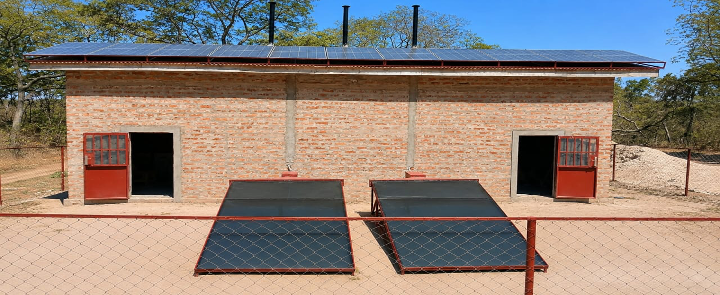
The innovation has moved from laboratory development to practical field testing in Tabora, Tanzania, a major tobacco-producing area.
The research team built a pilot drying system in Tabora to test the technology under practical operating conditions in collaboration with the Tobacco Research Institute of Tanzania (TORITA) for co-validation activities.
The research team found that the pilot was able to dry 100 kilograms of tobacco in three days, in line with previous lab results.
The scientists also recorded a drying capacity of a minimum of 600 kilograms per batch, suggesting the system’s potential for larger-scale agricultural application.
The technology is linked to the registration of intellectual property TZ/P/2025/000082 with the title “Preheating and Photovoltaic Machine and a Method for Multistage Tobacco Drying.”
What’s Next? Scaling Solar Drying System
The next priority after the pilot testing in Tabora is to scale up the technology by establishing more solar-powered drying centers in tobacco-producing areas.
The research team is looking for partnerships and support to increase the number of drying facilities and access to the technology for farmers.
Further development and wider adoption could help to reduce the consumption of firewood, improve efficiency of agricultural processing and support more environmentally responsible farming practices.
With this innovation, NM-AIST continues to showcase how research-based technologies can solve practical problems, promote renewable energy and contribute to sustainable development in Tanzania.
Innovation at a Glance
| Innovation | Solar-Photovoltaic Dryer for Tobacco and Horticultural Products |
| Lead Innovator | Seuri Saiguran Kilakoi |
| Research Team | Prof. Thomas Thomas Kivevele, Dr. Baraka Kichonge and Dr. Mtaki Thomas Maagi |
| Institution | Nelson Mandela African Institution of Science and Technology (NM-AIST) |
| School | Materials, Energy, Water and Environmental Sciences (MEWES) |
| Research Started | 2024 |
| Year Developed | 2025 |
| Sector | Agriculture, Renewable Energy and Agricultural Processing |
| Technology | Solar-photovoltaic multistage drying system |
| IP Title | Preheating and Photovoltaic Machine and a Method for Multistage Tobacco Drying |
| IP Reference | TZ/P/2025/000082 |
| IP Year Reported | 2025 |
| Development Stage | Pilot testing and scale-up planning |
| Pilot Location | Tabora, Tanzania |
| Reported Drying Time | 3 days, compared with up to 10 days using conventional methods |
| Reported Batch Capacity | Minimum capacity of 600 kg |
| Pilot Support | Tobacco Research Institute of Tanzania (TORITA) |
| Potential Beneficiaries | Tobacco and horticultural farmers |
Partner with us
NM-AIST is seeking collaboration with agricultural organizations, renewable energy companies, investors, development partners and industry stakeholders who want to support the wider deployment of this innovation.
Partnership opportunity: Assisting in establishing more solar-powered drying centers in tobacco-growing regions and expanding the technology into wider commercial use.
Using renewable energy to improve agricultural processing and make it less damaging to the environment.