
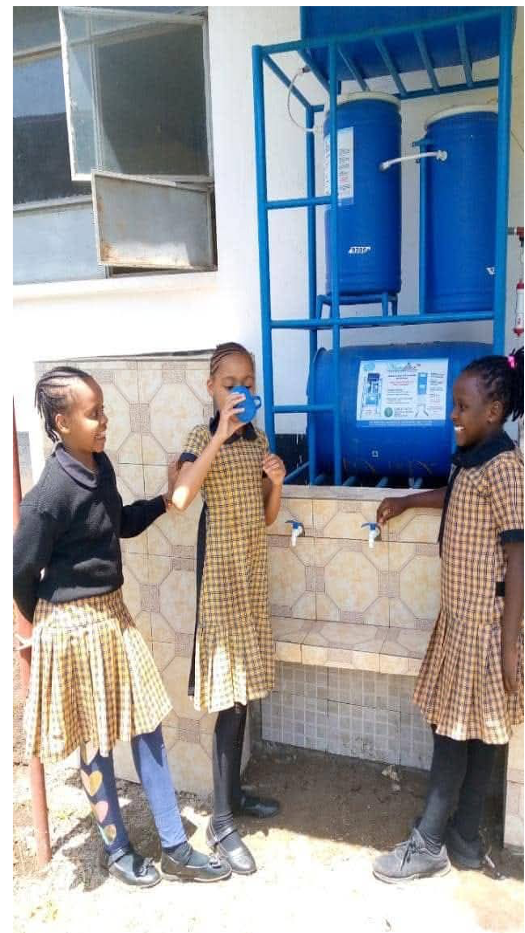
This homegrown water purification technology is helping schools, households and communities all over Tanzania to access cleaner, safer drinking water. Developed by Prof. Askwar Hilonga.
The issue: When Safe Drinking Water Is Not Available
But, there are still many communities in Tanzania that have difficulty getting access to clean and safe drinking water, especially in the rural areas where families have a hard time finding reliable sources of water.
In some parts of northern and central Tanzania, high levels of fluoride in water can also affect dental health and contaminated drinking water increases the risk of waterborne diseases.
Prof. Askwar Hilonga, researcher at Nelson Mandela African Institution of Science and Technology (NM-AIST), had a personal challenge.
Growing up in Gongali Village, he saw the struggles families had to access safe water. He was determined to make a difference and set out to use his scientific knowledge to develop a solution that could improve lives in his community and beyond.
From Personal Mission to Scientific Breakthrough
In 2014, Prof. Hilonga began to research an affordable water purification technology to address different forms of water contamination.
He wanted to develop a system that could remove not only harmful microorganisms but also chemical contaminants, such as excess fluoride, which affects water quality in parts of Tanzania.
This research resulted in the development of the Nano Filter in 2015, a water purification system that combines traditional filtration methods and nanotechnology-based materials.
What started as a challenge in his village of origin has now become an innovation aimed at benefitting households, schools, health facilities and communities with similar water quality challenges.
Innovation: Making Unfit Water Safe for Drinking
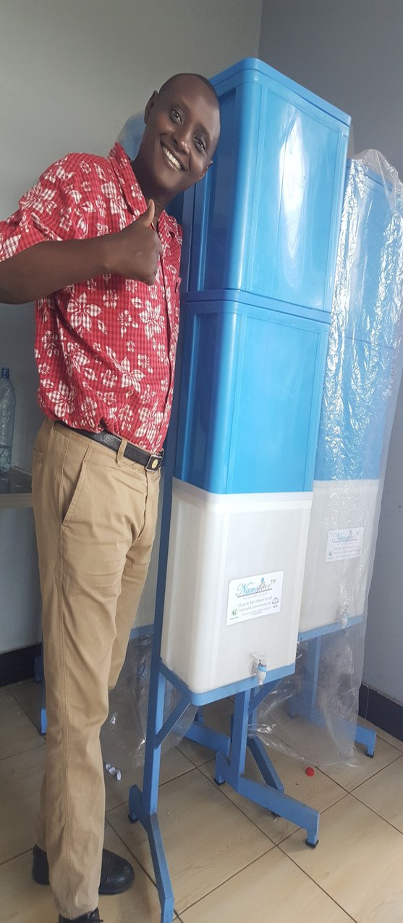
The Nano Filter is an inexpensive water filter that removes harmful impurities through a three-stage filtration process.
1. Sand filtration: The water passes through a slow-sand filtration phase which assists in the removal of impurities and micro-organisms.
2. Treatment based on Nano-technology: In the second stage, specifically developed materials such as sodium silicate and silver-based nanomaterials are used to remove chemical contaminants like fluoride and selected heavy metals.
3. Membrane Filtration The last stage employs a fine hollow-fibre membrane to give an additional barrier against contaminants.
Because the system can be tailored to local water-quality challenges, it is appropriate for diverse geographical areas and community needs.
The system can achieve greater than 99.9% removal of targeted contaminants under reported testing conditions, but performance depends on the contaminants present and system configuration.
The Nano Filter also offers a chance to lessen reliance on bottled drinking water and the associated plastic waste by presenting an indigenous solution to water treatment.
Why It Matters: Better Health, Better Opportunities
This innovation has implications far beyond the purification of water.
Access to safer drinking water can help rural households reduce their exposure to waterborne diseases and harmful chemical contaminants.
Reliable water-treatment solutions for schools and health facilities can help create healthier environments in which to learn and work.
The technology also provides economic opportunities, such as setting up and running community water-refilling centers, which could create employment for young people in installation, operation and maintenance.
The Nano Filter, which marries scientific innovation with practical community needs, is an example of how locally developed technologies can play a role in improving public health, environmental sustainability and economic empowerment.
From Research to Impact in the Real World
Unlike innovations still being tested in laboratories, the Nano Filter has moved into commercial application through Gongali Limited, a company working to advance the technology’s deployment throughout Tanzania.
The researcher cites figures that show the innovation has achieved:
– 450+ schools and health facilities using the technology.
– More than 70 community-based water-refilling centers established across Tanzania.
– More than 2,000 households with household Nano Filter systems.
– More than 2 million beneficiaries reached through its different applications.
These figures are an indication of the reported scale of the innovation’s reach and its capacity to help address challenges in water access.
The innovation has also been widely acclaimed with the researcher reporting about 20 awards including a health-related award from the World Health Organization.
The Nano Filter was developed in 2015, the same year identified in the researcher’s submission in relation to the intellectual property protection of the invention.
Next Steps More communities with greater access
Having demonstrated that Nano Filter can work commercially, the next goal is to scale up the use of Nano Filter technology, especially in public institutions and underprivileged rural areas.”
Prof Hilonga is also trying to engage government authorities including ministries responsible for education, health and local government to explore opportunities for wider deployment.
A key focus will be to support the uptake of the technology in schools across Tanzania, especially in rural areas where access to safe drinking water remains a challenge.
Through ongoing partnerships and institutional collaboration, the Nano Filter can reach more communities and help improve access to safe water.
From a challenge in the village of Gongali to a technology that now serves communities across the country, the Nano Filter exemplifies NM-AIST’s commitment to turning research into practical solutions to improve people’s lives.
Innovation at a Glance
| Innovation | Nano Filter Water Purification Technology |
| Lead Innovator | Prof. Askwar Hilonga |
| Institution | Nelson Mandela African Institution of Science and Technology (NM-AIST) |
| School | Materials, Energy, Water and Environmental Sciences (MEWES) |
| Research Started | 2014 |
| Year Developed | 2015 |
| Sector | Water, Public Health, Environmental Technology and Nanotechnology |
| Core Technology | Three-stage filtration incorporating sand, nanomaterials and hollow-fibre membrane |
| IP Year Reported | 2015 |
| Development Stage | Commercialised |
| Commercialisation Company | Gongali Limited |
| Reported Institutional Reach | 450+ schools and health facilities |
| Community Water Centres | 70+ |
| Household Installations | 2,000+ |
| Reported Beneficiaries | Over 2 million |
Join Our Team
NM-AIST is seeking partnerships with government institutions, development partners, NGOs, educational institutions and private sector organizations interested in increasing access to safe drinking water via locally developed technology.
Current partnership opportunity: Support for adoption of nano filter systems in schools, health facilities and underserved communities, particularly in rural Tanzania.
Turning scientific knowledge into cleaner water, healthier communities and lasting effects.